Website Costs in South Africa & USA 2026
Web Design, Website Pricing South Africa, Lead Generation
How Much Does a Website Cost in South Africa and the USA in 2026?
In 2026, a typical small business website in South Africa costs between R5,000 and R30,000, while similar websites in the USA usually sit between $3,000 and $10,000. At Ukuthula Sales Solutions in Brits, we guide clients to choose a website budget that makes sense for leads and sales, not just for looks.
Quick answer: website cost in South Africa 2026 vs USA
For most South African small businesses, website design prices in 2026 are:
Landing page / single page: from R1,990
Basic 5‑page website: R5,000–R15,000, with an average of R6,254 across 56 South African providers (SMERocket 2026 survey)
Professional small business site: R8,000–R30,000
eCommerce: from R50,000, up to R300,000+ for large retailers
In the USA, the same size websites usually cost more:
Freelancer small business site: $1,500–$8,000
Professional small business site: $3,000–$10,000, with 61% of US small businesses spending under $10,000 (Clutch 2026)
What drives website pricing South Africa in 2026?
Whether you run a guesthouse in Hartbeespoort, a hunting safari near Thabazimbi, or an industrial supplier in Rustenburg, the website development cost you are quoted usually depends on six main factors:
Number of pages. A simple 5‑page site is cheaper than a 20‑page site with blog and resources. Most small business sites sit in the R5,000–R16,000 band for 3–5 pages, according to several 2026 guides such as Clevex and New Perspective Design.
Design approach. Template‑based layouts cost less. Custom layouts that match your brand and sales process cost more but usually convert better to enquiries.
Functionality. Online bookings, eCommerce, client portals, or integrations with a CRM or accounting system quickly push a project into the R30,000+ range for South Africa and well above $10,000 in the USA.
Content and SEO. If the agency writes copy, sources photos and sets up on‑page SEO, the price rises, but you save time and get better Google results and more enquiries from day one.
Provider type. Freelancers in South Africa charge around R500–R1,500 per hour. Agencies sit around R450–R1,200 per hour, often with a team covering design, development, tracking and lead generation strategy.
Lead generation focus. A website that is built to work with Google Ads, CRM, WhatsApp and automation needs more planning, but it usually pays for itself far quicker than a basic template site.
South African website design prices by type of site
Using the verified 2026 data you provided, here is a practical view of what small businesses in South Africa can expect to pay:
Landing page / single page: from R1,990. Good for testing a single offer, such as a mid‑week special at a lodge or a once‑off hunting package. Often combined with Google Ads to drive traffic quickly.
Basic 5‑page small business website: R5,000–R15,000. This is the common “brochure” site: Home, About, Services, Gallery, Contact. SMERocket’s 2026 survey across 56 agencies shows an average of R6,254 for this size site in South Africa.
Professional small business website: R8,000–R30,000. Custom layout, stronger SEO, mobile optimisation and conversion‑focused elements like WhatsApp buttons, quote forms and clear service pages. This is the range Ukuthula works in for most hospitality, industrial and retail clients who want leads, not just a digital brochure. See our Website Design page for how we approach this.
eCommerce website: from R50,000, up to R300,000+ for large retailers. Price depends on product count, stock control, payment gateways, shipping rules and integrations with ERP or warehouse systems. The research data you supplied from EcomSolve and others shows many agencies quoting R8,000–R40,000+ for smaller stores and R80,000–R250,000+ for advanced setups.
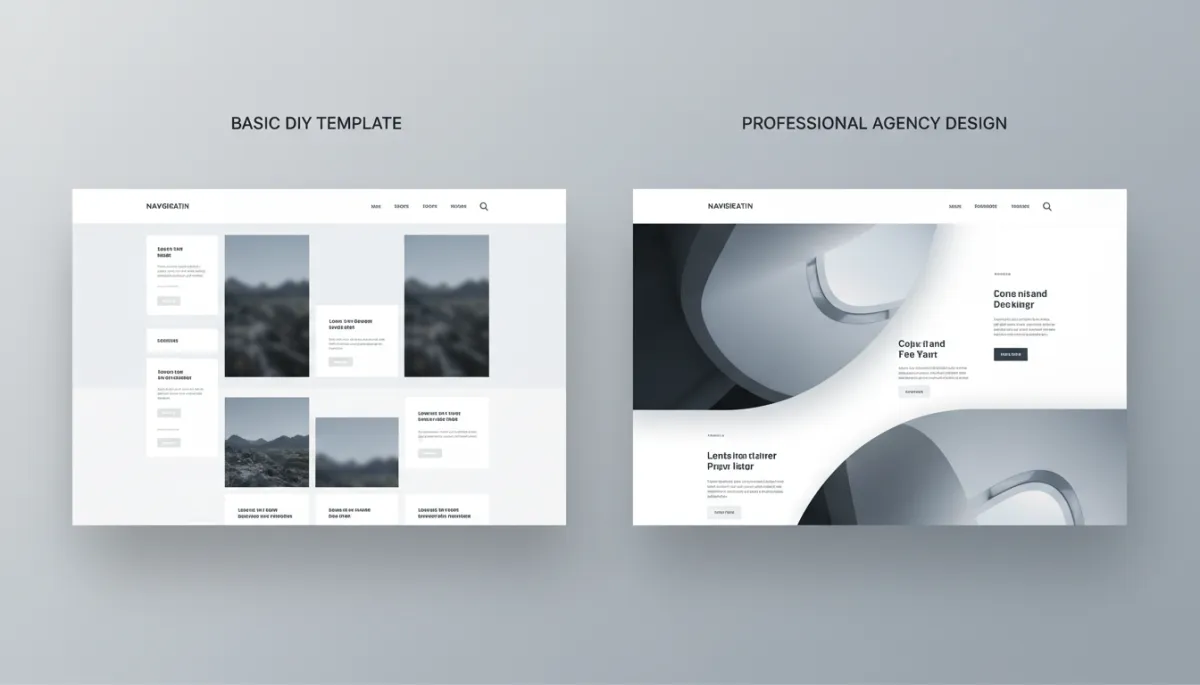
Professional builds cost more upfront but usually deliver far better enquiry rates.
Website design cost USA 2026: why is it higher?
In the USA, website development cost is pushed up by higher hourly rates and labour costs. The verified figures you supplied show:
DIY builders such as Wix or Squarespace: $200–$600 per year, similar to South African DIY pricing when converted to rand, but you do all the work yourself.
Freelancer small business site: $1,500–$8,000, depending on scope and experience of the freelancer.
Professional small business site, often via a boutique agency: $3,000–$10,000, with boutique agencies charging $6,000–$35,000+ for more complex builds and custom design.
eCommerce websites: $8,000–$25,000+ for typical stores, with custom web applications starting at $25,000 and running past $100,000 for complex portals.
Freelancer hourly rates in the USA sit around $50–$120, and agencies often charge $100–$200 per hour. That is why many South African businesses can get US‑level quality at a more affordable rand price if the provider works efficiently and uses tools like AI and automation well, as Ukuthula does in our Business Automation and CRM projects.
SA vs USA website pricing: what this means for your budget
If you convert US pricing to rand at a realistic 2026 exchange rate, many American small businesses pay the equivalent of R55,000–R180,000 for the same type of website that a South African small business can get for R8,000–R30,000. That gap exists because of labour costs, not because of a secret extra feature.
For a guesthouse in Brits or a mining supplier in Rustenburg, this means two things:
You do not need US‑level budgets to get a site that converts visitors to WhatsApp enquiries and quote requests. A focused R10,000–R25,000 build, connected to Google Ads and CRM, is usually enough to see a clear return.
You should still treat your website as a sales asset, not a tick‑box expense. A R3,000 template site that never appears in Google or sends enquiries is more expensive than a R20,000 site that brings in R30,000 per month in bookings or orders.
💡 Pro Tip: When you compare quotes, calculate what one extra quality lead per day is worth to you. For many hunting safaris, mining suppliers and retailers, that alone can repay a professional website within months.
What is usually not included in website quotes (but you still pay for)
One reason website pricing feels confusing is that many quotes leave out ongoing or “hidden” costs. When you receive a quote, check whether it includes:
Hosting. In South Africa, hosting is usually R100–R500 per month. Very cheap packages often mean slow servers, which hurt Google rankings and frustrate potential guests or buyers on mobile.
Domain registration. Your .co.za or .com domain is normally a few hundred rand per year. Make sure the domain is registered in your name, not the designer’s name, so you keep control of your brand.
SEO setup. Many low‑cost packages do not include keyword research, title tags, meta descriptions or Google Search Console setup. That means your site looks fine but never ranks. At Ukuthula, SEO basics are part of our lead‑focused builds, because traffic without enquiries has no value.
Copywriting. Writing clear, persuasive copy that answers buyer questions, builds trust and drives action is hard work. If you have to write everything yourself after hours, a cheap R4,000 build can turn into months of delay. Investing in professional copy is often the difference between a site that converts and one that sits empty.
Maintenance and support. South African maintenance retainers usually range from R500 to R2,000+ per month. This covers updates, security, content changes and small fixes. Without maintenance, plugins break, forms fail and enquiry emails go missing. Ukuthula offers ongoing support options so your site and lead generation keep working.
Why the cheapest website often costs more in the long run
It is tempting to pick the lowest quote, especially when cash flow is tight. The problem is that a R2,000 or R3,000 site usually cuts corners in the exact places that affect enquiries and sales.
Pages load slowly, especially on mobile in rural areas where many safari and mining clients sit. Visitors leave before the page loads, so your Google Ads costs increase and your conversions drop.
Forms and WhatsApp buttons are not tested properly. You only realise weeks later that messages never reached your inbox or phone, which means lost bookings you never knew about.
There is no tracking. You cannot see website visits, WhatsApp clicks, form submissions, calls or cost per lead. That makes it impossible to improve your marketing or scale your Google Ads.
We often meet owners in Brits and across the North West who first spent R3,000–R5,000 on a basic site, then another R10,000–R15,000 twelve months later to rebuild it properly. A better path is to invest once in a site that is planned around your sales process, your Google Business Profile, your ads and your CRM from day one.
How a lead-focused website actually makes its money back
At Ukuthula, we design websites as part of a full sales system. A typical visitor journey looks like this:
Someone searches on Google for “guesthouse in Brits”, “hunting safari North West” or “industrial valves Rustenburg”. Your site appears because your on‑page SEO and Google Business Profile are set up correctly.
They land on a clear page that loads quickly, shows proof such as reviews or photos, and answers basic questions on price, availability and location. Trust and perceived value rise within seconds.
Strong calls to action guide them: WhatsApp button, “Request a quote”, “Book a call”, or a simple enquiry form. The fewer decisions they must make, the more likely they are to contact you.
The enquiry flows into a CRM such as GoHighLevel, which we set up and connect for you. Automated replies confirm their request, and follow‑up reminders make sure no lead is forgotten. Our CRM and Business Automation services handle this.
AI agents or simple automations qualify leads, send directions, share rate cards or collect extra details. Your team spends time on serious buyers, not on repeating the same basic answers all day.
When you measure website visits, WhatsApp clicks, form submissions, calls and cost per lead, you can see exactly how the site is performing and where to improve. This is how a R15,000 website can generate hundreds of thousands of rand in bookings or orders over its lifetime.

Modern digital marketing workspace with multiple screens showing website analytics, Google Ads...
Practical steps you can take this week
If you are deciding how much to spend on a new website in 2026, here are clear steps:
List your must‑have pages and features: Home, Services, Gallery, Rates, Contact, online booking, product catalogue, WhatsApp chat, CRM integration and so on.
Decide whether you need enquiries only or full online payment. Enquiry‑only sites are cheaper and often enough for safaris, guesthouses and many industrial suppliers.
Set a realistic budget based on the ranges above. For most small businesses, R8,000–R25,000 is a sensible starting point for a lead‑driven site with tracking and support.
Make sure every quote clearly states what is included: hosting, domain, SEO, copywriting, Google Analytics, Google Business Profile setup, maintenance and support. If it is not written, assume it is not included.
FAQs about website cost in South Africa 2026
1. How much does a website cost for a small business in South Africa?
For a small business, website pricing in South Africa usually ranges from R5,000 to R30,000. Basic 5‑page sites sit around R5,000–R15,000, while more professional, lead‑focused builds range from R8,000–R30,000 depending on features and content.
2. Can I get a decent website for under R5,000?
You can get a basic template site or landing page for under R5,000, but it will likely need more work later to improve SEO, tracking and conversion. This can be fine for a short‑term campaign, but for long‑term lead generation most businesses are better off in the R8,000+ range.
3. What is the ongoing monthly cost after my website is live?
Budget at least R100–R500 per month for hosting and a few hundred rand per year for your domain. If you want maintenance, content updates and support, expect R500–R2,000+ per month depending on how active your site is and how much help you need.
4. Is it cheaper to use a DIY website builder?
DIY builders can be cheaper in cash terms, but you pay with your time and lost leads if the site is slow, unclear or not optimised. For owners who are already busy running operations, hiring a specialist like Ukuthula usually gives a better return than spending weekends trying to design and fix a site alone.
5. Why does a website in the USA cost more than in South Africa?
The main reason is hourly rates. US freelancers often charge $50–$120 per hour and agencies $100–$200 per hour. South African rates in rand are much lower, so you can get similar quality for less money if the project is planned and managed well.
6. How do I know if my website is actually working?
Track key numbers: website visits, WhatsApp clicks, form submissions, calls and cost per lead from Google Ads or other campaigns. If those numbers are improving and you see more qualified enquiries, your website is doing its job. Ukuthula sets up this tracking as part of our lead generation and Google Ads services.
7. How long does it take to build a small business website?
A focused 5‑ to 10‑page site usually takes 3–6 weeks if content is ready and decisions are made quickly. Larger or more complex sites, especially eCommerce or custom systems, can take several months to do properly.
Ready to invest in a website that brings real enquiries?
The real question is not just “how much does a website cost” but “what kind of website will bring me steady, high‑quality leads at a cost per lead I am happy with”. For hospitality, hunting safaris, mining, industrial and retail businesses across South Africa, that is where Ukuthula Sales Solutions focuses its work: websites, Google Ads, lead generation, CRM, automation and AI agents working together as one system.
If you want a clear, honest quote for a website that is built to generate enquiries, visit ukuthulasalessolutions.co.za, WhatsApp +27 63 260 2023, or email [email protected]. We are ready to help you choose the right investment for your next stage of growth.
