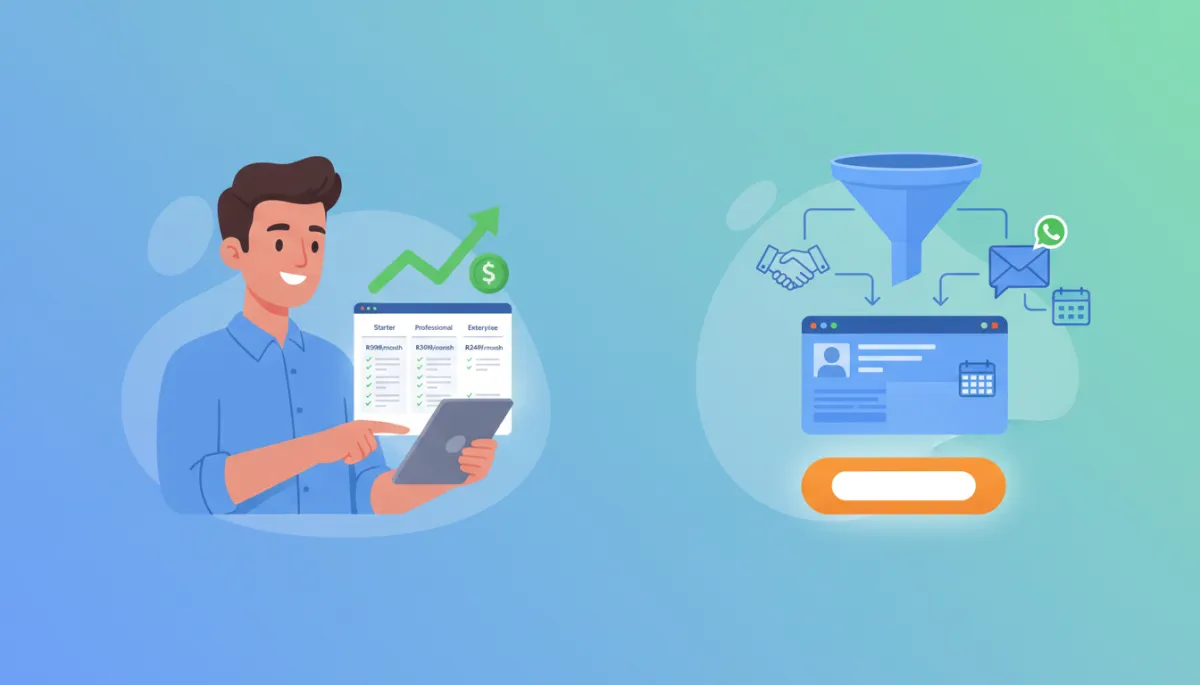
Show Prices on Website? Guide for SA Businesses
Sales Strategy, Website Pricing, Lead Generation
Should I Show Prices on My Website? A Practical Guide for South African Businesses
Yes, in most cases you should show some form of pricing on your business website, because it builds trust, filters out poor‑fit enquiries, and helps serious buyers decide faster. However, how you show prices – exact amounts, “from” pricing, ranges, or custom quotes – must match your service, margins, and sales strategy.
Featured Snippet-Style Answer: Should I Show Prices on My Website?
You should usually show prices or at least clear price guidance on your website. Transparent website pricing builds trust, reduces time‑wasting enquiries, and helps visitors qualify themselves before contacting you. The right mix of exact prices, “from” pricing, ranges, and custom quotes depends on how standard, complex, or customised your services are.
Why Website Pricing Is a Sales Decision, Not Just a Design Choice
When owners ask, “Should I show prices on my website?” they are really asking, “Will prices scare people away and hurt my sales?” At Ukuthula Sales Solutions, we see the opposite happen for most small businesses in South Africa: clear pricing, backed by value and proof, increases website enquiries, WhatsApp clicks, and quality quote requests – especially when combined with Google Ads, CRM, and automation.
When You Should Show Prices on Your Website
Your service is relatively standard. For example, a small accounting firm offering monthly bookkeeping packages, or a cleaning company with set office cleaning plans in Johannesburg or Cape Town. Standard services suit exact pricing or clear packages.
You want to filter out low‑budget enquiries. If your minimum website design package is R8 000, showing “Websites from R8 000” stops R1 500 budget leads from filling in your forms or calling your team all day.
You drive paid traffic. If you are running Google Ads or social media campaigns, visitors expect quick clarity. Transparent website pricing improves conversion rate, reduces cost per lead, and makes every click more valuable.
Your competitors are transparent. In industries like gyms, co‑working spaces, or small business software, customers compare prices across multiple tabs. If your business website hides pricing completely, you look less confident and less trustworthy.
In these cases, showing prices on your website supports better lead generation, higher‑quality enquiries, and a more efficient sales funnel. It also reduces “How much?” WhatsApp messages that go nowhere, and allows your CRM and automation to nurture the right people with the right follow‑up.
When You Should Not Show Exact Prices
There are also situations where showing a fixed price can hurt sales more than help:
Your service is highly custom. For example, large construction projects, custom software development, or complex industrial installations. One client’s “website” might be R15 000; another’s might be R250 000. A single number can mislead both.
You need a discovery process. If your value depends on strategy sessions, site visits, or audits, forcing a price before context can anchor the client on cost instead of outcomes, and reduce perceived value.
You work with tenders or negotiated contracts. Some B2B services in South Africa (security, logistics, facilities management) are priced per contract. Publishing exact numbers might create confusion or weaken your negotiation position.
In these cases, it is usually better to combine price ranges, “from” pricing, or clear custom‑quote messaging with strong calls‑to‑action, enquiry forms, and WhatsApp buttons that feed into your CRM and automated follow‑up sequences.
The Five Main Website Pricing Options (and When to Use Each)
1. Exact Pricing
Exact pricing shows a clear, final amount (for example, “Business Website: R9 950 once‑off”). It works well when your service is standard, your costs are predictable, and you want to reduce friction. Think of a basic logo design package, a standard tax return, or a fixed‑scope website design package in South Africa.
2. “Starting From” Pricing
“Starting from” pricing sets a minimum anchor, for example, “Social media management from R4 500 per month.” This filters out very low budgets while giving you room to quote higher depending on scope. It is ideal for creative agencies, photographers, and professional website design services where complexity can vary.
3. Price Ranges
Price ranges (for example, “Most small business websites cost between R10 000 and R25 000”) help visitors understand the ballpark while accepting that every project is different. This is effective for construction, renovations, and digital marketing South Africa services like SEO or Google Ads management.
4. Packages and Bundles
Packages group services into clear options (for example, “Starter, Growth, and Scale” packages). Each package shows features, outcomes, and a price or price range. This format is powerful for lead generation websites, marketing retainers, hosting, and CRM or automation setups, because it makes comparison easy and anchors perceived value.
5. Custom Quote Pricing
Custom quote pricing does not display a number but clearly explains that pricing is tailored. To make this work, your website must strongly communicate value, process, and proof, and make it effortless to request an online quote via forms, WhatsApp, or a guided questionnaire integrated into your CRM.
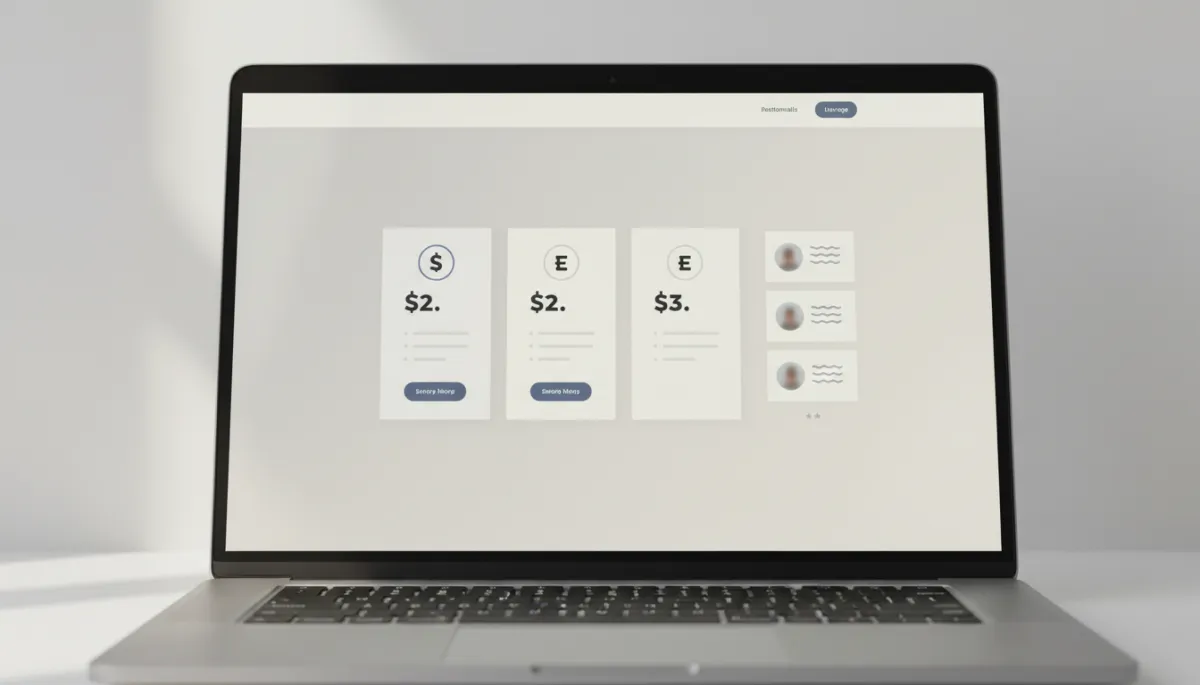
Clear pricing cards with proof and CTAs often increase enquiry and quote request rates.
How Website Pricing Builds Trust and Filters Better Leads
From a conversion psychology perspective, people feel safer when they understand what to expect. Transparent website pricing lowers anxiety, reduces hesitation, and positions your business as honest and professional. When visitors see clear numbers, proof, and outcomes, they are more willing to click your “Request a Quote” or “WhatsApp Us” buttons.
Pricing also acts as a filter. A Pretoria-based HR consultancy that shows “Retainer packages from R7 500 per month” will attract serious business owners, not job seekers or one‑off CV requests. Your sales team spends less time on poor‑fit leads and more time on high‑value opportunities, improving lead‑to‑sale rate and revenue per enquiry.
When Pricing Hurts Sales: No Context, No Value, No Proof
Pricing alone is not enough. A lonely number on a page can easily scare people away if there is no explanation of value, process, or outcomes. For example, “Website design: R15 000” on a basic page with no portfolio, no testimonials, and no Google Business Profile link will feel expensive and risky compared to a competitor with strong proof and clear packages.
This is especially dangerous for highly custom services. If a Durban construction company lists “House renovations from R250 000” without project photos, before‑and‑after examples, or reviews, visitors may assume the price is inflated. The problem is not the amount; it is the missing story around value, trust, and outcomes.
💡 Pro Tip: Never show pricing without pairing it with benefits, deliverables, timelines, testimonials, and clear next steps. Price must always sit inside a value narrative.
Connecting Price to Value, Outcomes, and Proof
On a high‑performing business website, price is never the first or only thing the visitor sees. The ideal UX flow is:
Problem recognition: The visitor sees that you understand their challenge (for example, “Your website is not generating leads”).
Value and outcomes: You explain how your solution improves website conversion, increases WhatsApp enquiries, or reduces cost per lead.
Proof and trust: You show testimonials, Google reviews, case studies, and logos from credible directories or industry platforms.
Pricing and options: Only now do you present exact pricing, ranges, or packages, supported by clear comparison tables or package cards.
Call‑to‑action: You make it easy to enquire via forms, WhatsApp, or phone, and feed those leads into your CRM and automation.
This structure connects price to value, outcomes, and trust. It shifts the visitor’s thinking from “How much does this cost?” to “Is this worth it for the result I want?”
Making Pricing Support Lead Generation, WhatsApp, and Your CRM
A pricing page should not be a dead end. It should be a powerful lead generation asset that feeds your sales funnel. Ukuthula Sales Solutions designs pricing sections that integrate tightly with enquiry forms, WhatsApp click‑to‑chat, and CRM systems, so every interest becomes a trackable opportunity.
Pricing tables and package cards: Use visually clear cards with headings, benefits, and “Enquire Now” or “Get a Custom Quote” buttons. Each button should trigger a tracked form submission or WhatsApp message.
Smart enquiry forms: Ask key qualifying questions (budget range, location, required timeline). Send these into your CRM so your team can prioritise high‑value leads and automate follow‑up emails or SMS.
WhatsApp integration: Add “WhatsApp for a Quick Quote” buttons on your pricing section. Track clicks as events in Google Analytics and connect them to your Google Ads campaigns to measure cost per WhatsApp enquiry.
With the right setup, you can measure website visits, button clicks, form submissions, quote requests, and lead‑to‑sale rate. This data tells you whether your website pricing is attracting the right people and how to adjust your offers for better conversion.
Practical South African Examples
Cape Town photographer: Uses “Wedding packages from R9 500” with three package cards, sample galleries, and testimonials from local couples. Most website enquiries already understand the budget, so the photographer spends less time defending prices and more time closing bookings.
Johannesburg IT support company: Offers exact pricing for remote support retainers (e.g., R3 500, R6 500, R11 000 per month) plus a “Custom enterprise quote” option. Their lead generation website routes all quote requests into a CRM, with automated follow‑up emails explaining onboarding and case studies.
Durban renovations business: Uses price ranges (“Bathroom renovations typically between R40 000 and R120 000”) with strong before‑and‑after photos, Google Business Profile reviews, and a simple “Request a Site Visit” form. The result: fewer “just looking” calls, more serious project enquiries.
Simple Steps You Can Take Today
Decide whether your service is standard, semi‑custom, or highly custom. Choose between exact pricing, “from” pricing, ranges, packages, or custom quotes accordingly.
Add at least one clear price indicator to your website – even if it is only a range or “from” amount – to guide expectations and filter leads.
Pair every price with benefits, outcomes, and proof: testimonials, review screenshots, project photos, or case study highlights.
Add strong call‑to‑action buttons: “Get a Quote,” “WhatsApp for Pricing,” or “Book a Free Consultation,” linked to forms or WhatsApp that feed into your CRM.
Review your Google Business Profile, HelloPeter, and other directories. Make sure your online reviews and ratings support the pricing you show on your site.
FAQ: Website Pricing and Online Enquiries
1. Will showing prices on my website scare customers away?
It will only scare away people who were never your ideal clients. The right customers appreciate clarity. When pricing is connected to strong value, outcomes, and proof, it usually increases enquiries and improves lead quality rather than reducing them.
2. What if my competitors undercut my website pricing?
Competing only on price is a race to the bottom. Instead, use your website to position your value: better support, faster delivery, proven results, and higher reliability. Show reviews, case studies, and guarantees so visitors understand why your price is fair – even if it is not the lowest.
3. Is “Contact us for a quote” enough on its own?
Usually not. Modern buyers want at least a ballpark before they enquire. Combine “Contact us for a quote” with ranges or “from” pricing, plus a simple quote request form or WhatsApp option that feeds into your CRM and automation for fast follow‑up.
4. How do I know if my website pricing is working?
Track key metrics: website visits, time on the pricing page, WhatsApp clicks, form submissions, quote requests, cost per lead (if you run Google Ads), and lead‑to‑sale rate. If enquiries and conversion rates improve after adding or adjusting pricing, your strategy is working.
5. Where should pricing appear on my business website?
At minimum, dedicate a clear Pricing or Packages page. You can also add summary pricing blocks to key service pages, with links to more detail. Use visual elements like pricing tables, package cards, and call‑to‑action buttons to guide visitors smoothly into enquiries or quote requests.
6. Can Ukuthula Sales Solutions help me design a pricing strategy and page?
Yes. We specialise in professional website design South Africa, lead generation websites, Google Ads, CRM setups, and automation. We help you decide what to show, how to present it visually, and how to connect pricing to your sales funnel so every visit has a better chance of becoming a paying client.
Turn Your Website Pricing into a Sales Engine with Ukuthula Sales Solutions
Whether you choose exact prices, “from” pricing, ranges, packages, or custom quotes, your website pricing should do more than answer “How much?” It should build trust, position your value, filter the right leads, and smoothly guide visitors into enquiries, WhatsApp conversations, and booked sales calls – all tracked inside a smart CRM and automation system.
Ukuthula Sales Solutions helps South African businesses design sales‑focused websites, lead generation systems, Google Ads campaigns, CRM workflows, and digital sales funnels that turn pricing into a competitive advantage. If you are unsure how to show prices on your website – or you want a website that actually gets leads, not just visits – reach out to our team and let us help you build a clear, confident, and conversion‑ready online presence.
