
Blog Post
AI Website Creation: Worth It and Best Conversions
Websites, AI Tools, Conversion Optimization
Creating Your Own Website with AI: Is It Worth It, and What Converts Best?
In 2026, you can describe your business in a few sentences, click a button, and have a functioning website in minutes. The question is no longer “Can AI build my site?” but “Should I let it—and how do I get a site that actually converts visitors into customers?” This guide walks you through whether building your own site with AI is worth it, the difference between hiring an AI-focused agency and using an AI website builder, and which option tends to convert best in the real world.
Is Building Your Website with AI Actually Worth It?
For most individuals and small businesses, yes—using AI is worth it, as long as you choose the right level of help. Modern AI builders like Wix Harmony / Aria, Squarespace Blueprint AI, and Hostinger’s AI builder can generate layouts, copy, and even basic SEO in minutes. That’s a massive time and cost advantage over traditional custom development, which can run into the thousands of dollars and take weeks or months.
The real test is performance. Recent data suggests that AI-built sites are closing the gap with professional builds. For example, one 2026 analysis found that AI-built e‑commerce stores convert at around 2.3%, compared with 2.6% for professionally designed stores, and AI-built B2B lead-gen sites convert at about 3.1% versus 3.2% for traditional builds (365iwebdesign.co.uk). That’s remarkably close, especially considering the price difference.
Where AI shines is speed and iteration. Tools like Wix Harmony let you describe your brand in natural language and instantly get a draft site that you can refine with drag-and-drop controls. Squarespace’s Blueprint AI does the same with a strong emphasis on polished design, ideal for creators and bloggers. If you’re starting from zero, AI can get you from “no site” to “good enough to launch” in a single afternoon—then you can improve over time using built-in analytics and AI copy suggestions.
💡 Key point: AI is most worth it when you treat it as a fast starting point and keep iterating, not as a one-click final solution.
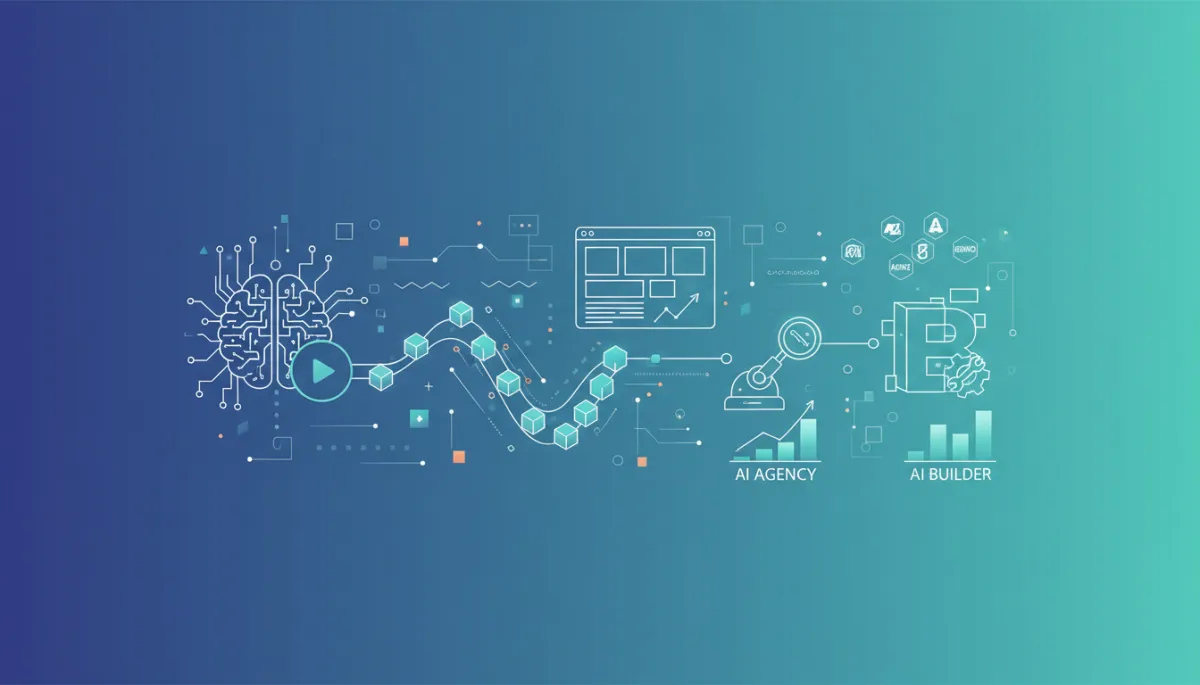
AI Agency vs. AI Website Builder: What’s the Difference?
Once you decide to use AI, your next choice is who drives the AI: you, using an AI builder, or a specialist AI agency that builds and optimizes the site for you. Both rely on similar underlying technologies, but the experience—and results—can be very different.
What an AI Website Builder Offers
Speed: Platforms like Wix Harmony, Squarespace Blueprint AI, Durable, and Hostinger can generate a site in minutes based on a short description of your business and goals.
Affordability: Typical pricing ranges from around $2.99/month on Hostinger’s intro plans to about $16–$17/month for Squarespace or Wix, which includes hosting, templates, and AI tools.
Templates and design: Builders like Squarespace and Framer AI are known for beautiful, modern layouts; Wix offers a huge ecosystem of templates and apps; Durable focuses on ultra-fast local business sites.
DIY control: You can edit copy, images, and layouts yourself without code, and many tools now include AI copywriting and SEO suggestions.
The trade‑off is that you’re working within a standardized system. You get a site that looks and works well, but you’re responsible for crafting the right messaging, choosing the right structure, and optimizing for conversions over time. If you’re not comfortable with marketing or UX, you may end up with a site that looks good but doesn’t perform as well as it could.
What an AI Agency Brings to the Table
Strategy first: AI agencies typically start with your business model, audience, and goals. They use AI tools, but they also bring human expertise in positioning, copywriting, and funnel design (Forbes Tech Council).
Customization: Instead of relying on generic templates, agencies can combine AI builders, custom code, and integrations—especially on platforms like WordPress (via 10Web), Webflow, or full‑stack tools such as Lovable for SaaS‑style apps.
Ongoing optimization: Many agencies offer continuous A/B testing, AI‑driven personalization, and analytics reviews to steadily improve conversion rates over time.
Hands‑off build: Instead of learning a new platform, you collaborate on direction while the agency handles implementation and fine‑tuning.
The downsides? Cost and time. AI agencies are usually aimed at serious businesses or funded projects. While AI helps them work faster, you’re still paying for expertise and custom work, not just a software subscription. Timelines are also longer than a DIY builder—think weeks instead of hours—because they’re testing, refining, and integrating more deeply with your business systems.
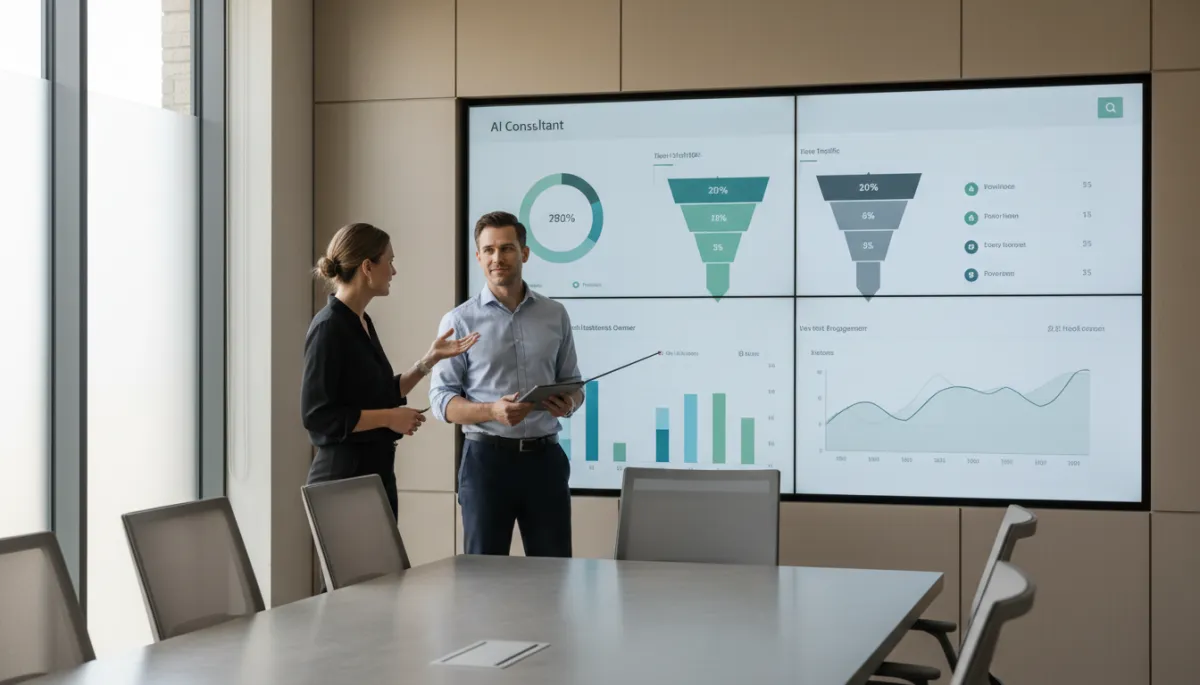
Expert guidance plus AI tools often turn a decent site into a consistent lead engine.
Which Option Converts Best: AI Agency or AI Builder?
Conversion rates are where the nuances really matter. The data shows that AI itself isn’t the bottleneck—it’s how intelligently it’s used. AI‑powered SaaS landing pages, for example, have reported conversion rates around 12.3%, compared with an industry average of 7.5% (nxcode.io). AI‑assisted e‑commerce product pages can hit about 3.8% versus a typical 2.5% (nxcode.io). That’s a big uplift, but these results don’t come from one‑click generic templates; they come from deliberate optimization.
How DIY AI Builders Tend to Perform
If you spin up a site on a basic or free AI builder, use the default copy, and never touch it again, you’re likely to see below‑average conversions. Studies in 2026 show that generic AI templates often convert at just 0.3%–0.8%, and free platforms for small businesses average around 0.5%–1.2% (turbopress.pro, zoer.ai). That’s significantly lower than the typical 2.5%–3.0% e‑commerce average or the 4%–6% range for professional services lead‑gen sites (krishaweb.com).
However, when you actively refine what the AI gives you—tweaking headlines, simplifying forms, improving page speed, and using AI personalization—results can jump dramatically. AI‑driven personalization alone can lift conversions by 15%–40% (krishaweb.com), and advanced prompt engineering plus iterative testing has been shown to boost performance by about 34% compared with default AI outputs (getathenic.com). In other words, a motivated individual who’s willing to learn can get surprisingly close to “agency‑level” performance using a good AI builder.
How AI Agencies Typically Outperform
AI agencies combine those same tools with experience and focus. They know how many fields your lead forms should have, which hero headlines tend to work in your niche, and how to structure your call‑to‑action based on whether you’re selling services, products, or subscriptions. They also pay attention to details like page speed—shaving a single second off load time can increase conversions by around 17% (rudys.ai).
Because agencies are constantly testing and refining, they’re more likely to reach the top‑quartile benchmarks you see in conversion studies: lead‑gen forms converting at 11%+, landing pages in the 12%+ range, and e‑commerce stores performing above the 3.5%–5.0% top‑10% band. They also understand how to align your website with your traffic sources—for example, optimizing for high‑intent AI‑referred visitors, who can convert at 10%–20% and are about 4.4× more likely to convert than standard organic traffic (Semrush and Reddit‑reported data).
So Which Converts Best for You?
If you have time but limited budget, a strong AI builder (Wix Harmony, Squarespace, Hostinger, Durable) plus a commitment to ongoing tweaks can get you into the “good to very good” range for your industry.
If you have budget but limited time or expertise, an AI‑savvy agency is more likely to push you into the top‑performing tier, especially for competitive niches like SaaS, high‑ticket services, or e‑commerce.
📌 Practical rule of thumb: AI builders win on speed and cost; AI agencies win on consistent, optimized conversions—especially when every percentage point of uplift matters.
How to Decide: A Simple Framework for Individuals
Choose an AI Builder If:
You’re launching a portfolio, blog, or early‑stage side hustle and need a credible online presence fast.
Your budget is under a few hundred dollars, and a $16–$20/month subscription feels manageable.
You’re willing to spend some time learning basic marketing principles and using AI to help you test headlines, offers, and layouts.
Consider an AI Agency If:
Your website is a primary revenue driver (for example, a high‑ticket coaching business, a SaaS product, or a local service with strong competition).
You have a clear budget for marketing and want to maximize ROI rather than minimize cost.
You’d rather pay for expertise and results than spend hours tweaking your own site.
Final Verdict: Is It Worth Creating Your Own Website with AI?
AI has turned website creation from a technical hurdle into a business decision. For most individuals, it is absolutely worth using AI—either through a self‑serve builder or an AI‑driven agency—because it compresses timelines, reduces costs, and, when used well, can match or even beat traditional build conversion rates.
If you’re just getting started, an AI builder like Wix Harmony or Squarespace Blueprint AI is likely your best bet: low risk, fast results, and plenty of room to learn. As your traffic and revenue grow, you can always upgrade—either by layering in more advanced AI optimization yourself or by partnering with an AI agency to squeeze every last percentage point of performance from your site.
The key is not whether AI builds your website, but how intentionally you use it. Treat AI as a powerful assistant, stay focused on your visitors’ needs, and your site can become more than just a digital business card—it can become a reliable, high‑converting engine for your goals.


COMPANY
CUSTOMER CARE
LEGAL
FOLLOW US


Copyright 2026. Ukuthula Sales Solutions. All Rights Reserved.
Design and Build By Ukuthula Sales Soloutions