
Blog Post
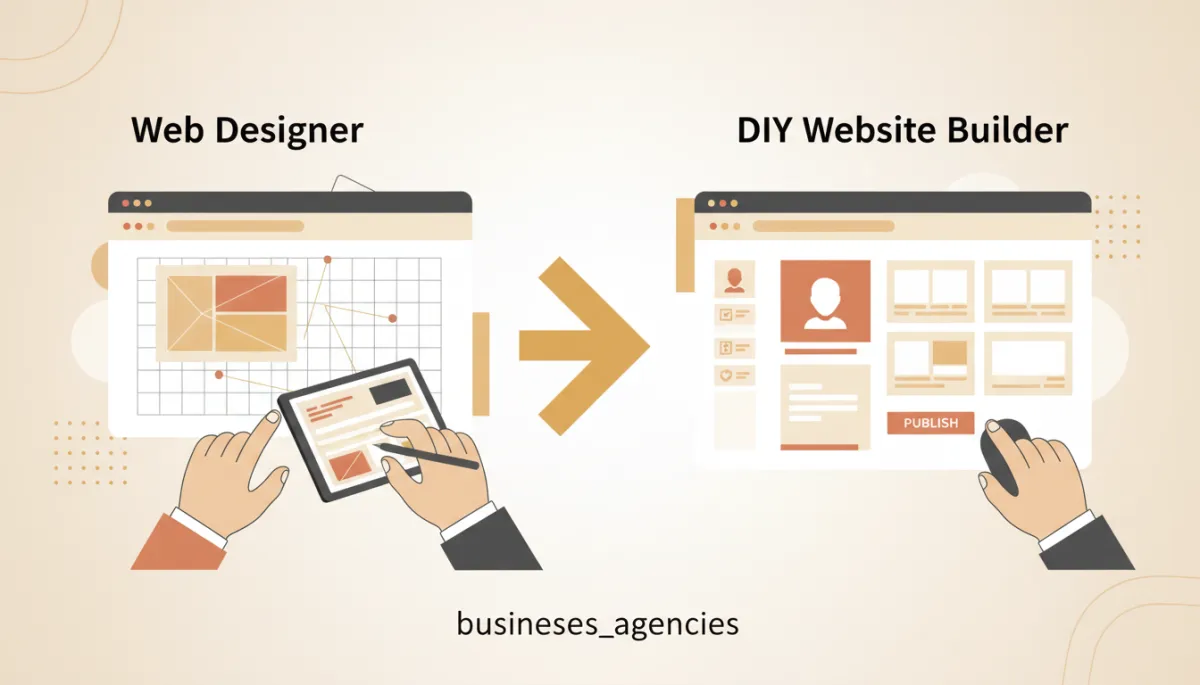
Hire a Web Designer or Use DIY Website Builder?
Business Strategy, Web Designer, DIY Website Builder, Website Creation
Should You Hire a Web Designer or Use a DIY Website Builder?
If you run a business or agency, your website is not a side project—it’s your frontline sales machine. The real question isn’t whether you need a website. It’s whether you dare to rely on a DIY Website Builder or are ready to Hire a Web Designer and build a serious digital asset.
Are DIY website builders like Wix, Squarespace, and Shopify actually good?
Yes. DIY website builders are not bad products. They solve a real problem by allowing businesses to get online quickly without needing coding knowledge or a large upfront investment.
They are often a good option for:
startups testing an idea
very small businesses
temporary landing pages
businesses needing a simple online presence
people working with limited budgets
The problem starts when business owners believe a website alone will automatically grow the business.
Many DIY websites look decent visually but struggle with:
SEO
lead generation
conversions
mobile performance
trust-building
automation
scalability
A website that “looks fine” is not always a website that performs well.
What are the biggest mistakes businesses make when choosing a web designer or agency?
One of the biggest mistakes is choosing based only on price.
Cheap websites often become expensive later through:
poor performance
lost leads
rebuilds
slow websites
SEO problems
poor support
Another huge mistake is focusing only on appearance.
A beautiful website means very little if:
nobody finds it on Google
visitors do not contact the business
customers feel confused
the mobile experience is poor
there is no clear strategy behind it
Many businesses also fail to ask important questions like:
Who owns the domain?
Who controls the hosting?
Will I have access to everything?
Is SEO included?
What happens after launch?
I have seen businesses lose access to their own websites because the developer controlled everything.
What makes a professional website worth paying for?
A professional website becomes worth paying for when it starts producing real business results.
The biggest difference between a cheap website and a professional business website is strategy.
A professional website should help:
generate leads
increase sales
build trust
improve Google visibility
save time through automation
improve customer experience
support long-term business growth
Most customers decide within seconds whether they trust a business online.
If the website feels:
outdated
slow
confusing
incomplete
many people leave immediately.
A professional website should not just look modern.
It should actively help grow the business.
What happens when businesses try building websites themselves or hire the wrong designer?
I often see businesses come for help after spending months trying to build websites themselves or after hiring the wrong agency.
Most business owners think the problem is:
“I need a better-looking website”
“I need more traffic”
“I need better graphics”
But the real problem is usually:
weak messaging
poor SEO
unclear customer journey
no lead generation system
poor mobile optimisation
no conversion strategy
Many websites fail because they are built from the owner’s perspective instead of the customer’s perspective.
The biggest improvements usually come from:
simplifying the structure
improving clarity
building trust
improving speed
focusing on conversions
optimising for mobile
implementing SEO properly
What should business owners ask themselves before deciding between DIY and hiring a professional?
The first question should be:
“What is the real purpose of this website?”
If the website only needs to exist online, DIY may work fine.
But if the website needs to:
generate leads
rank on Google
support sales
automate communication
compete online
build trust
then the decision becomes much more important.
Business owners should also ask:
How much is my time worth?
Do I understand SEO?
Can I structure a website for conversions?
Do I realistically have time to manage this properly?
Is my website important for long-term growth?
Many people underestimate how much work goes into building and managing a high-performing website properly.
What do most people only realise about websites when it is already too late?
One of the biggest surprises for business owners is that launching a website is only the beginning.
Many websites fail because:
they are never properly indexed on Google
SEO is ignored
mobile optimisation is poor
pages load slowly
security is neglected
customer experience is weak
Another hidden problem is scalability.
Many DIY websites become difficult to expand later when businesses need:
CRM integration
automation
booking systems
ecommerce functionality
advanced SEO
lead tracking
Another major issue is lost opportunities.
Many businesses never realise how many customers quietly leave because the website:
feels untrustworthy
is confusing
loads slowly
looks outdated
lacks clarity
A bad website can silently cost a business money every single month.
What should businesses look for before hiring a web designer?
Businesses should look for someone who understands business growth, not just design.
A good web designer should understand:
customer psychology
SEO
conversions
user experience
lead generation
sales flow
automation
One of the biggest signs of a good agency is the quality of the questions they ask.
They should want to understand:
your goals
your customers
your competition
your challenges
your sales process
Businesses should also ask:
Will I own everything?
Is SEO included?
What support happens afterward?
How will leads be tracked?
Is the website mobile optimised?
The best-performing websites are usually not the fanciest.
They are the clearest and easiest to use.
What are the biggest myths about websites that frustrate you?
One of the biggest myths is:
“If you build a website, customers will come.”
That is simply not true anymore.
Without:
SEO
strategy
trust
traffic
conversions
clear messaging
many websites produce very little business.
Another myth is:
“You just need a pretty website.”
Good design matters, but design alone does not create growth.
I also strongly disagree with:
“SEO is dead”
“Social media is enough”
“Websites are once-off projects”
Businesses still need:
Google visibility
strong SEO
trust-building
long-term online ownership
structured customer journeys
Websites should evolve continuously through:
optimisation
content updates
SEO improvements
testing
performance tracking
How is my approach different from most web designers or agencies?
I do not see websites as design projects only.
I see them as part of a complete business growth system.
Many agencies focus heavily on:
visuals
trends
animations
fancy graphics
I focus more on:
business goals
trust
customer behaviour
lead generation
conversions
automation
long-term growth
I believe many businesses are not struggling because they need prettier websites.
They are struggling because they lack:
structured lead flow
follow-up systems
automation
clear positioning
online visibility
customer trust
A website should reduce chaos inside a business, not create more of it.
That means focusing heavily on:
clarity
simplicity
customer psychology
SEO
communication
user experience
conversion strategy
The best websites are not always the most visually impressive.
They are the ones that make customers feel confident enough to take action.
So, should you hire a professional or use a DIY website builder?
There is no universal answer.
If you are:
testing an idea
starting small
working with a tight budget
only needing a basic online presence
then a DIY website builder can absolutely be a smart starting point.
But if your website needs to:
generate consistent leads
rank on Google
support serious business growth
build strong trust
automate communication
compete professionally online
then strategy becomes far more important than simply building a cheap website.
A website today is no longer just a design project.
It is part of:
your reputation
your customer experience
your marketing
your sales process
your business growth system
The real question is not:
“Should I build it myself or hire someone?”
The real question is:
“What solution will best help my business grow?”


COMPANY
CUSTOMER CARE
LEGAL
FOLLOW US


Copyright 2026. Ukuthula Sales Solutions. All Rights Reserved.
Design and Build By Ukuthula Sales Soloutions